How to choose a padel racket
What shape, weight, face and core hardness actually do — and what a racket above your level does to your game.
Updated 4 September 2026
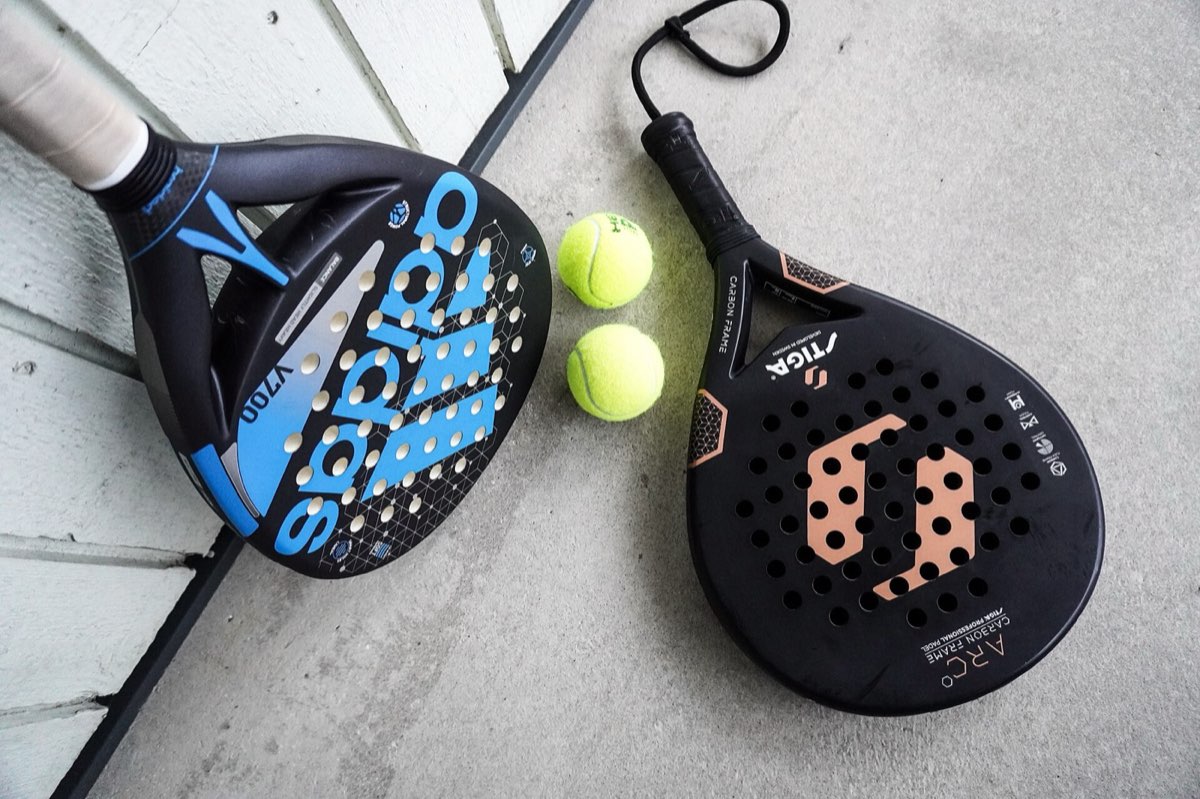
Shape: round, teardrop, diamond
Shape sets where the balance point sits, and it's the most consequential part of the choice.
- Round: balance near the hand, wide sweet spot. The most forgiving shape, control-oriented. For a beginner the answer is nearly always this.
- Teardrop: balanced. A middle road between control and power, where most intermediates land.
- Diamond: balance near the tip, narrow sweet spot. Very powerful struck cleanly, jarring when you miss. For advanced players.
Weight
Padel rackets run roughly 350-390 grams. A heavier racket generates more power but tires your arm and leaves you late on fast balls at the net.
The common mistake is buying heavy for power. Power in padel comes from timing and position, not from the arm. Being on time with a light racket always beats being late with a heavy one.
If you're starting out, 355-365 grams is a good band. Go lighter still if you have elbow or shoulder trouble.
Face: fibreglass or carbon?
Fibreglass flexes more: it holds the ball longer, forgives more, and costs less. Plenty for beginners and intermediates.
Carbon is stiffer: more feedback, more control, more power — but you can't use that until your technique settles, and a stiff face raises the risk of arm injury.
Numbers like 12K and 18K describe how tightly the carbon is woven. A higher number doesn't mean better, it means stiffer.
Core hardness
The EVA foam inside decides how the ball sinks into the racket and springs back. Soft foam is more comfortable and more forgiving; hard foam gives more power but demands a clean strike.
Foam stiffens in the cold — if your racket feels different in winter, you're not imagining it.
Handle, grip and wrist strap
Padel handles are not sized as tennis grips are: nearly all come in one size, and the thickness is set by how you wrap them. Larger hands add one or two overgrips; smaller hands leave the original grip alone.
That adjustment is a matter of comfort and of health. A handle too thin makes you clench harder than you need to, and that is one of the known causes of elbow pain. Changing grip thickness alters the feel considerably without changing the racket.
Each layer of overgrip also adds a few grams, and that weight sits at the handle — near the hand — which nudges the racket towards control. Lead tape does the same thing in reverse: grams at the head add power but tire the arm faster.
The wrist strap is compulsory and it is not a formality: there are three other people on the court, and a racket that leaves the hand causes real injuries. Set its length so it sits against the wrist — a loose strap does nothing at all.
Matching the racket to your level
The most common error is buying for the level you want rather than the one you play at. A stiff diamond-shaped carbon racket doesn't fix an unsettled technique — it magnifies the mistakes.
The racket finder on this site exists for exactly this: you enter your level and it matches the catalogue on shape, weight and stiffness.
Trying before buying
The most valuable piece of information in this choice is how the racket feels in your hand. A racket that suits you on paper can arrive heavy or harsh on court, and only hitting with it tells you.
Most clubs have rental rackets and some hold demo rackets left by the brands. Playing an hour with the model you are considering gives a far better answer than reading about the same model.
If there is nothing to demo, the nearest reference is the players at your club: hitting a few balls with the racket of someone near your own level beats hours in a catalogue.
Looking after the racket
The most common thing that shortens a racket's life is temperature. Left in a car boot in summer, the foam inside degrades and the adhesive weakens; left out in the cold in winter, the racket arrives on court stiff, and that is when the risk of cracking on the first strikes is highest.
Protective tape along the top edge is cheap and it works. The top edge is where a racket takes its damage as it scrapes the ground, and as long as the tape covers it, cracks do not start.
A crack is audible: when the sound loses its solidity and turns hollow, the body may have begun to delaminate. A hairline crack caught early can still last a season, but once delamination starts, repair is not the answer.
Storing it dry, in its cover, is enough; nothing else is needed. Humidity affects the grip wrap more than the foam, and the wrap is a consumable anyway.
Budget, and when to replace
Don't spend heavily on your first racket. Your game will change in six months and you'll actually know what you want by then.
Rackets have a lifespan: play regularly and the foam dies in one to two years, leaving the racket feeling lifeless. Performance drops even if nothing is cracked.
Last season's model is usually the best value. Brands release new ones yearly, but the difference is rarely something most players can feel.
Frequently asked questions
- Which racket should a beginner buy?
- A round head, a soft core and something in the 355-365 gram band. The round head puts the sweet spot in the middle and spreads it wide, so it forgives balls you do not middle. A fibreglass face suits this level better than carbon: more flex, lower cost and less load on the arm.
- Is a heavier racket more powerful?
- On paper yes, on court usually not. Power in padel comes from timing and position; being late with a heavy racket produces less than being on time with a light one. Weight only turns into a gain once the technique has settled.
- Carbon or fibreglass?
- For beginners and intermediates fibreglass is plenty. Carbon gives more control and feedback, but a stiff face demands a clean strike and raises the risk of arm injury. Numbers like 12K and 18K describe the weave: a higher number is not better, it is stiffer.
- How long does a padel racket last?
- For someone playing regularly, the foam dies within one to two years. Even uncracked, the racket starts to feel lifeless — the ball no longer sinks in and springs back. Leaving it in the heat shortens that noticeably.
- Does grip thickness matter?
- A great deal. Padel handles come in one size and the thickness is set by the overgrip. A handle too thin makes you clench harder than necessary, and that is one of the known causes of elbow pain.
- Is last season's model worth buying?
- That is usually where the value is. Brands release a new model every year, but the difference between two seasons is rarely something most players feel on court.